Monday, January 11, 2010

New Installation...


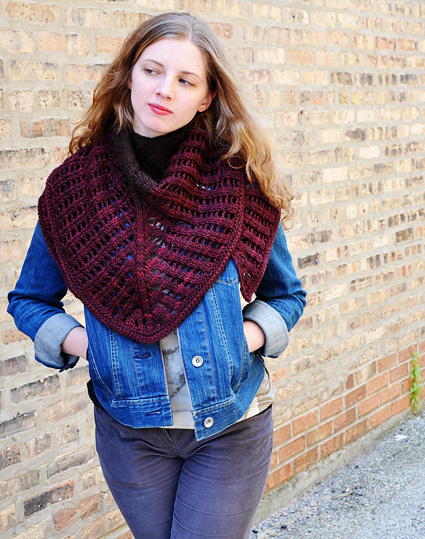
Here is my newest hand knit creation. I made it with a whole skein of 100% Merino wool yarn my fiance bought me for Christmas. I love the yarn it's so soft. Expensive but soooooo worth it. If you have very sensitive skin like I do, Merino Wool is the way to go people! Please comment. And yes, it is on etsy.

Saturday, January 9, 2010

More Knitty Favorites...!

I am sure I have established just how much of a fanatic I am about the website known as Knitty.com. But I feel the urge to continue showing my affection and loyalty! Buen provecho!

asdf


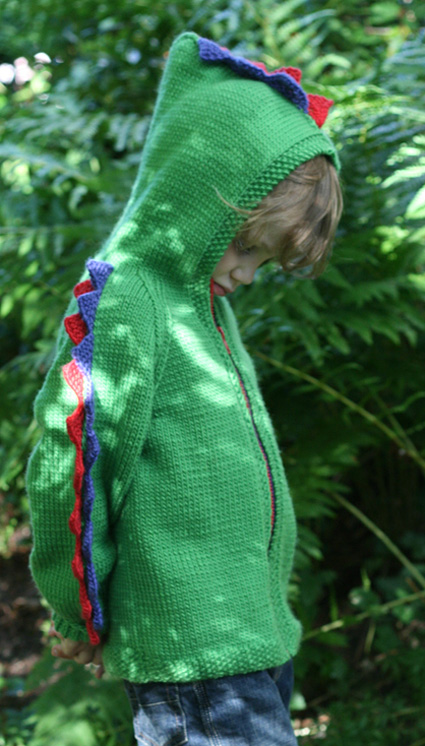
Steggie ( Issue Spring 09')
asdf


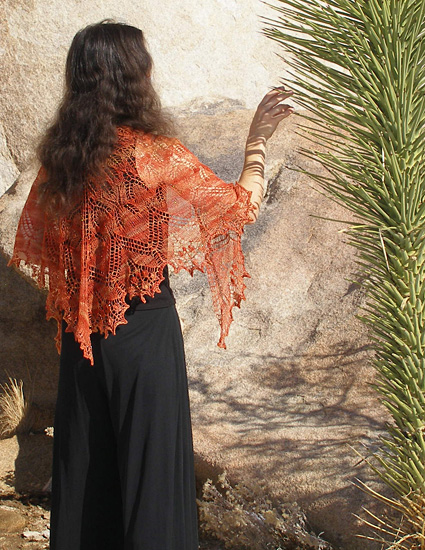
Aeolian shawl ( Issue Spring 09')
asdf


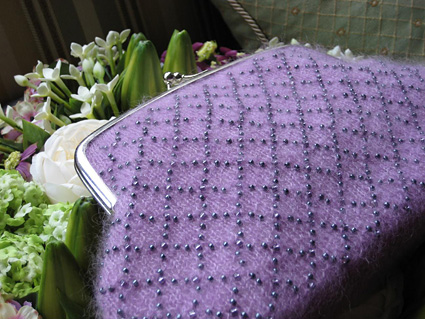
Morning Glory ( Issue Summer 09')
asdf


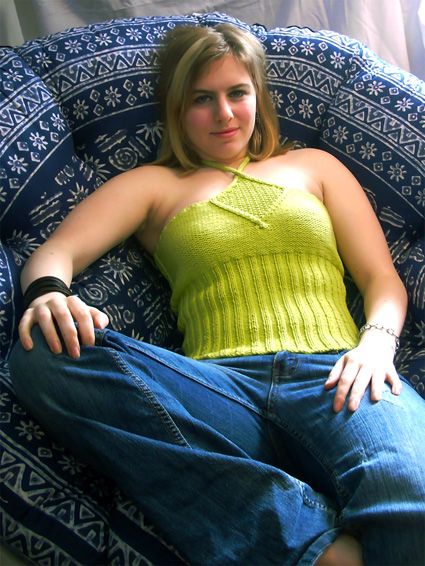
Diamond Halter (Issue Summer 09')
beauty shot


Colonnade (Issue Fall 09')

Wednesday, August 12, 2009

Berroco Favorites...

Went through the entire Berroco website free patterns ( literately) and listed all my favorite ones below. Enjoy!


Tuesday, August 11, 2009

Vintage Knitting...

If you love vintage knits and/or knitting here are a hand full of patterns for you. As alway, the more I find, the more I post.

Collection of free knitting patterns...

I've decided to continually collect and post up free knitting patterns I find over my internet surfing travels. Who knows, maybe they will be some use to someone.

Afghans/Throws:

Serenity (Intermediate) Alexi Throw ( Experienced)


Baby Blankets:


Baby Clothes:

Baby Poonam ( Intermediate) Baby Cardigan ( Easy) Baby Hoodie ( Intermediate)
Bunny beanie ( Intermediate) Summer Top ( Experienced) Eyelet Baby Cardigan ( Experienced)
Kanoko Pants ( Intermediate) Rudyard Baby Sweater ( Easy)

Cardigans:

Carmella ( Intermediate) Carina (Intermediate) Chunky Cable Cardigan ( Experienced)
Linea Rossa ( Experienced) Gala (Intermediate) Luanna (Experienced) Mood ( Intermediate)
Necktie ( Intermediate) Organico ( Intermediate) Springtime in Paris ( Intermediate)
Turpan ( Intermediate) Victorian (Experienced) Wrap-around (Intermediate)

Child's Clothing:

Lee and Purse( Intermediate) Poncho (Easy) Jumper ( Easy)

Jacket's (Men's):

Cycling Aran ( Experienced)


Sunday, August 9, 2009

Tip of the day...

Circular knitting needles and their Use.

It may look tough to do, but it actually isn't very hard at all. In reality they are not circular, most are simply two short needles attached at the ends by a single nylon cord. These nylon cords themselves vary in length: anywhere for 6-60 inches long.

Pros:
  • No ends after the completion of the very first row.
  • No turning after completing each and every row ( You are essentially going around and around and around until you reach your desired length for the piece).
  • Stockinette can be produced without having to alternate between knit and purl per row ( you can stitch either purl or knit all the time).
  • (I like circular knitting needles for the simple fact that the majority of the stitches ( and their weight) fall on the nylon cord, reducing the stress on my hands and wrists.)

Cons:
  • make sure your project will fit correctly...(i.e. use shorter lengths for children's clothing and longer cords for adult clothing.)
  • markers are a must (having no edge makes it hard to take spot where to start or stop)
  • After casting on make sure stitches are not twisted on the cable.
  • Never turn back!

Thursday, August 6, 2009

Bespeckled Band...

Yet another of my latest work. This is a short (19 inch) scarf I made with a really colorful wool blend my fiance bought for me some time ago. He bought just 1 skein for $12 and tax so the yarn instantly became a treasure to me. As a treasure I irked to find something special to make with the special yarn. Ergo...


Tuesday, August 4, 2009

An Absolute must have...


Alright. So you're not exactly a knitting novice. But you're not exactly an expert either. The perks to being an intermediate knitter is that you are at the point where you know you can knit, the hardest part ( learning) is over, and you still maintain an appreciation for harder patterns.One problem the intermediate knitter also commonly comes across is learning yarn and its abilities/attributes/expectations. I myself fall in this intermediate knitter category. I still have major problems with gauge and yarn types. Perhaps it's all because of all the "yarn boom" we've experienced since the 90's. There's just way too many different yarn types to choose from, which can honestly cause some frustration as well as confusion.
So on my quest to find the ultimate yarn book I
have finally, finally, finally found the book of yarn life. It is an absolute must must must. Meet ( and buy at Amazon.com) The Knitters Book of Yarn: The Ultimate Guide to Choosing, Using and Enjoying Yarn (Hardcover).


Blood and Bone and Blood Red...

My latest handiwork...


Blood Red ( Cowl)

Blood and Bone(scarf/headband)


Thursday, June 11, 2009

Blood red knitted neck warmer/cozy...

                      As promised...

Saturday, June 6, 2009

Knitted Purple Mohair Shawl...


The most recent of my work. It's made from a purple mohair yarn my cousin gave me as a gift. I had been wanting to make a cowl for some time now, and not wanting too simple a pattern I decided to design it in lace instead. 

Up next: Another cowl! But in what color??

Friday, May 1, 2009

Reversible Head Wrap (adult size)...


Here's a knitted reversible head wrap I just finished two minutes ago. I made it with Lion Brand Glitterspun Sparkling midnight blue yarn...Any thoughts?

Thursday, April 30, 2009

Knitted Decorative Clothing Line...

Request Version
Original version


This is the clothing line I am making for one of my Etsy Alchemy request. The colors are going to be different but the general look and feel will be the same. Pictures of my version coming up soon. 

Friday, March 27, 2009

Knitted Baby hat order done!


I am so glad that the customer who ordered all these hats did not place a time limit. Otherwise I would have been screwed. I have good time management, but what I don't have is TIME! Anyway, here are some that have been finally finished. I still need to photograph a few others that have also been completed.

Thursday, March 12, 2009

Flour Sac...


Wednesday, March 11, 2009

More Amazing...


Because...I...I just had to. Again, no free pattern. You'll have to buy it off of Etsy.

Saturday, February 28, 2009

Bedtime baby hat...

Adorable...

Monday, February 23, 2009

Knitted Baby Hats...

So I've found another client. She is a wonderful woman from California, with 6 kids, nieces and nephews. She made an Alchemy request for 15 different children's hats: 9 knitted baby bonnets, and  6 crocheted visor hats with detachable flowers of different colors. (She also asked for a crocheted clothing line of which I will post here soon. It's really neat). It's been a bit tough trying to find the colors close to what she wants, but so far it's been a good experience...I'll be posting pictures up as I make them so get ready for more posts! :)


Flour Sac Hat 


 Pixie Hat

Saturday, February 7, 2009

Amazing...


Wow...just...wow... I wish I had this kind of talent for knitting. I really, truly do. It is simply sick. (Sorry guys, no pattern. The designer clearly wants to keep it a secret :( )


Knitted DNA Helix...


I had the funny mind to make this knitted DNA Helix and give it to my genetics professor, Steve Denison. He's a bit of a stale looking fellow, however, underneath the leather exterior hides some pretty humorously soggy interior that just takes some probing to discover. I'm still thinking about making it for him. If not I could always amuse myself with it instead...me thinks. I'm guessing the designer made the thing for his or her child since the pattern holds the title of  Baby's First DNA Model (Yes, the link is connected to the pattern).

Thursday, February 5, 2009

Knitted Hellboy Plush Toy...

I found this on a blog on which the author was actually dissing crocheting. The post was entitled "13 things not to crochet". The Hellboy toy, however, is not crocheted, but knitted. The blogger apparently does not, or can not, tell the difference. Whatever...Who cares, right? Knitting and crocheting are both awesome! The misinformed blogger can bite me! 

Who agrees with me???


Drops Designs...

I have found yet another awesome website containing both knitting and crocheting patterns that are worth so much of your time! It's called Drops Design by Garn Studio, and it has a plethora of FREE patterns. I couldn't believe it at first but all of the patterns are free. Plus the patterns are nicely designed, not at all like the crappy ones you find when googling for free patterns ( well, most of them anyways). It's an incredible sites for women's, men's, children's, and miscellaneous patterns. I'm so excited about it I've already bookmarked over 2 dozen patterns. Yeah! There are just so many patterns! :::swoons:::  The site also sells other knitting and crocheting products as well, such as crochet hooks, knitting needles, yarn, etc, etc. This site is sick...

Here's the link: Drops Design  (Click on "Patterns")

Thursday, January 29, 2009

For the Roomie


I had some Lion Brand Wool-Ease Chunky yarn that I never did anything with and so I decided I'd make something for my room mate. She loved it and said it was really warm. Even though we're living in Fl at the moment, we still got some cold weather during this winter's freeze effect.
I made it with a size 8 straight needle and rib stitch pattern.

Sunday, January 18, 2009

Speaking of tips...Knitting Help.com

I just found this great website that has lots great video clips of knitting walkthroughs techniques and tips for all knitting levels. Which reminds me that I myself had planned on recording and posting similar video clips for my readers. Well. I think they've done a much better job than I could ever do. So here is the link. Enjoy!


Thursday, January 1, 2009

Needle sizing tip...

I had a lot of difficulty figuring out the right needle size for a ball of yarn that had lost its band label. So I started looking for ways to make it easier before actually beginning a project and having to break it up or have trouble with the needle an yarn altogether ( if the needle was too small it would puncture the yarn and if it was too large the stitches would come out really nasty). And I think I've found at least one way to do this...

  • Take the yarn and double it,
  • Thread it through the needle gauge
  • Find the one hole in which the yarn  fits right
  • Not to tight but not to loose

Thursday, December 25, 2008

Happy Holidays!

Well, it's the Holidays again. Unfortunately I didn't have enough money this year to buy presents so I made them instead. Most of them were crocheted and so they wont be posted up on this blog, but on my crochet blog instead. The knitted gift I did make was the womb. I'm giving it to my cousin who has three kids and a fourth one on its way. I changed the pattern to make it almost like a keep sake since I wanted to be able to put things inside of it. I thought about crocheting four little babies but didn't have the time so I just made four little hearts to represent the kids. Here's a picture of it. It's the third one I've made so far. Everyone who sees it is taken by surprise. It's a great pattern. Again. Happy Holidays!


Wednesday, November 5, 2008

America's Presidential Electoral History...


Because I just had to...


Friday, September 19, 2008

Beautiful Leggings....


Lolita Legs


...from where else but Knitty.com!

Thursday, September 11, 2008

In Loving Memory...


R. I. P.
Isaias Rivera

"Asta Luego"


Monday, September 8, 2008

Tip of the Day: Easier Project Piece Sewing...

(At first I thought this post should come after a post about binding off. Chronologically speaking, it is only too obvious that binding off comes before sewing the pieces of a project together. I realized, though, that in order for the method to work it has to take place before binding off. Guess which thought won?)

Two things I vividly remember hearing from my knitting instructor were on how hard it was for beginners to sew their project pieces together and on how hard it was for some to evenly sew their knitted pieces together.

She then gave me a method to get rid of these problems. It was so simple I couldn't believe more knitters did not practice it.

The secret, regardless of the pattern in use, is simply to add two extra stitches to the pattern and begin and end every row with a knit stitch. So, let's say for instance, you are following the Stockinet Stitch for a specific length. Just cast on two extra loops and when making the purl rows just make sure to make knit stitches both in the first and last stitches.

When both of your pieces are finished, ready to be sewn together, and held in an upright position, you will see that their edges will have visibly outstanding horizontal lines. The lines stand out from the rest of the pattern on the piece and are thus easier to pick up with your needle. This essentially eliminates the guess work. Not only are the stitches easier to find and pick up but also easier to line up so that the pieces are evenly sewn together.

The rest is done in the usual way but when you pull the string you will notice something different. This method not only facilitates a faster sew up but also...what...where did the hem go? You will see virtually no hem at all but a clean, whole piece. The project will look as if it had been made on a circular needle instead of on straights. ( More on circular needles later).

Try it and see.

Sunday, September 7, 2008

More Knitty!!

Ok, I have to admit it. I love Knitty.com and will most likely post up a lot of patterns from the site. But can you really blame me?? I mean, look at these things. It makes me almost jealous to see so many people come up with so many different things to knit up. The talent these people have is simply amazing. The best part is that it's all free and You yourself can submit a pattern to be published in upcoming seasonal editions.

So here are the rest for today (links included):

 Stockings:


Very Tall Socks


Penguin: Pasha


Mancala: Mancala Mia

Knitted Womb...


Yet another little item I found on Knitty. This site is absolutely amazing. This one is on how to knit a womb.::chuckle chuckle::How creative can people get? Anyway. Here's the link: Womb. Enjoy! 

Knitted Chain Scarf...

I found this project on Knitty.com. I had had an idea very similar to this but never tried to figure out a pattern. This makes me wish I had. It's really so simple. I made one but I didn't felt it. Here is the link to the pattern on Knitty: Marley's Ghost. I absolutely love it. You can make it as long or as short as you like and is simply great for Halloween. To the right is what mine looks like.

Tuesday, September 2, 2008

Seed Stitch and Rib Stitch...

After you've mastered the Stockinet and Garter Stitch patterns the next best step will probably be learning the Seed stitch.

Seed Stitch.
The Seed Stitch is just as easy to do as the Garter Stitch in that, obviously, you are still using the basic purl and knit stitches. For this stitch you simply alternate between both purl and knit stitches. Ergo, after casting on, your pattern will be P, K, P, K, P etc, etc for the first row. The trick is not only in remembering to switch from purl to knit ( or vice versa) but also in remembering to begin the next row with the opposite stitch of the previous one. When you look at your swatch you should see a knit stitch( \/) above a purl stitch ( - ) and so on. So, instead of having only purl or knit stitches on separate rows you will have a patterned mix of both. To the left is a photo of what Seed Stitch should look like.

The Rib Stitch.

Next is called the Rib Stitch or simply "ribbing". It is very similar to the Seed Stitch but with a slight difference. Instead of keeping the P, K, P, K, P pattern for every row, you instead switch between P, K, P, K, P for one row and K, P, K, P, K for the second row. This alternation results in having every knit stitch above the next knit stitch, and every purl stitch above the next purl stitch. You continue this alternation to create the rib pattern until you reach your desired length. To the left is a photo of what Rib Stitch should look like.
(There are also other types of ribbing such as the Two to One ribbing
in which there are two stitches of one type to one stitch of the other type. For example : knit two, purl one, and vice versa.)


I thought about a way to illustrate the visible differences between all of the stitching patterns I have so far covered in this blog. Ergo, I made a 16x20 swatch showing each of these patterns. Here it is...


On the upper left hand side is what the Seed Stitch should look like.
On the lower left hand side is what that KNIT ONLY side of the Stockinet Stitch should look like.
The upper right hand side is what the Rib Stitch should look like.
The lower right hand side is what the Garter Stitch should look like ( fro both sides).


On the upper left hand side is what the Rib Stitch should look like.
On the lower left hand side it what the Garter Stitch should look like (from both sides).
On the upper right hand side is what the Seed Stitch should look like.
On the lower right hand side is what the PURL ONLY side of the Stockinet Stitch should look like


Good Luck!


(And for those of you who saw it: Yes, it's the same swatch just reversed. ::wink wink::)


Monday, September 1, 2008

Etsy.com! Cool website I've discovered.

For those of you wanting, needing, or thinking about buying, selling or gathering inspirations for projects here's a great website to pull it off. There are people with some great talent in here. You can find various types of materials for various forms of arts and crafts as well, not just the handiwork. I've an account with them but haven't sold  and/or bought anything yet. You can look me up and drop me a line, my Username is " Thumbelyna". Enjoy!


Sunday, August 31, 2008

Yarn Type List...

Here is a short list of the major yarn types:


Alpaca.

Alpaca fleece is harvested from two types of Alpacas: the Huacaya and the Suri. The Huacaya alpacas produce soft, crimpy, dense fibers while the Suri produce silky fibers that resemble un-matted dread-locks. Its fiber is light-weight, silky, and full of luster. The Suri breed is favored over the Huacaya due to its longer length and silkier locks.

As a natural fiber it is similar to sheep's wool, however, it is much warmer, not as prickly, and lanolin free making it hypoallergenic but not water resistant.. Its physical structure greatly resembles that of hair, very glossy, but its softness and fineness allows spinners to easily produce satisfactory yarn. Alpaca fiber ranging from 18- 25 microns is considered the best quality.

Colors vary  from true blue black all the way down to rose-greys. White is predominant color because of selective breeding and is generally dyed many other colors.


Angora.


Angora wool, also known as angora fiber
, is produced by the Angora Rabbit. Angora wool and mohair are often mistaken, however, mohair is produced by the Angora goat( see below) instead of the rabbit. Angora is prized for its soft, silky, and "halo" (fluffy) textures. It has a noted low micron count, meaning it consists of considerably thin/finer fibers. Angora between 12-16 microns in diameter are considered the best quality. These are taken from the back and upper regions of the rabbit and are usually the cleanest (vegetable and hay free) and longest fibers. "Second class" fibers are sheered from the neck and lower regions which may contain some vegetable matter. The "third class" fibers are shorter and removed from the buttocks, legs, and/or any other areas that are seen to easily felt. Finally, the "fourth class" fibers are essentially anything else left on the rabbit's body that is badly stained and/or felted and thus deemed un-salvageable. Breeders practice daily brushing so as to lessen the matting of the wool and increase the portions of usable wool. 
Because the fibers felt so well on their own they provide an excellent source of felting material.

There are four main types of recognized rabbit breeds that produce angora fibers from their bodies:  French, Satin, English, and Giant. Many other breeds do exist, but the most common is the German. Perhaps the neatest thing about angora rabbits and goats is that, according to the breed, they have the ability to naturally produce wool coats of various black and white color shades.

Furs are produced in Chile, the United States, Europe, and China. They are harvested up to four times a year by process of "plucking", "shearing" or collecting the molten fur.  Plucking essentially pulls out the molten fur,  minimizing the presence of guard hair,  and effectively conserving its quality. This method is time consuming and some producers prefer shearing instead. Although faster, the process of shearing reduces the quality of the fur since all guard hair is included. In order for plucking to be possible the rabbit has to be a breed that will molt. An example of an angora rabbit breed that does not molt is the German.


Mohair.


Mohair is the silk-like yarn that's made from the hair of the Angora goat. It has adiameter of about 25-45 microns and is one of the oldest textile fibers  today. This diameter increases with the age of the goat meaning that finer fibers will be harvested from younger goats and less finer fibers harvested from older goats. For example, fibers coming from young goats are used for clothing, while fibers from older goats are used for carpets, rugs, etc, etc. Shearing is done twice a year and a single goat can produce up to 17 lbs of fiber each year. 

It's durable, resilient, stretch, flame, and crease resistant, and takes dyes very well. It's mostly noted, however, for it luster and sheen.

It is mostly composed of keratin, and has scales like wool that, although not fully developed, and merely illustrated. This is why it will not felt as wool does.


Saturday, August 30, 2008

Knitting Basics: Casting On, Knit, Purl, Stockinet, Garter...

First and Foremost.

I think the best thing for beginners to do is to use light weight, sizes 7-10 needles and medium to thick yarn when starting up their first lessons. Thicker yarn promotes faster results and larger needles are less hard on the fingers and also help pick up speed. The trick is finding a needle size that has a diameter closer to that of a pencil or pen.  Most people  are very familiar with the girth and weight of such a utensil and holding a needle of similar size will make learning a bit easier. Another thing is buying metal needles over plastics for smoother surfaces that will allow the yarn to slip off more easily. Beginners have a tendency to knit very tightly making it difficult to move the yarn from one needle tip to the other. In essence, the more comfortable you start out the better. Becoming frustrated can turn the craft sour, undesirable and more likely to be dropped.

Next. 

BE PATIENT. Two thing this craft will do is teach you some much needed patience if you are lacking in such virtue or make you hate it with all your heart.

Knitty-Gritty. 
Of course, the very first thing to learn is Casting on. Without it there can be no knitting. I have come to understand that there are a number of various ways to Cast on. I, however, have only learned two methods; the Knit-on Cast-on , and the Single Cast-on.
I personally prefer the Single Cast-on method since it makes for a much faster casting on and creates a "cleaner", neater, and more even looking edge for the project. The down side to this method is that it will slow you down come time to knit the first row since the cast on falls on the needle so tightly and does not make for easy "picking".
The Knit-on Cast-on, on the other hand, will at first take a bit more time and will not look as nice. The perks to this method is that it is actually the very first row of the pattern itself and allows you to continue knitting a lot more easily and faster since the first stitches are already there and falling looser on the needle.

Try both and see which one fits your fancy.

There are two main stitches to live by in knitting: the Purl and the Knit. For clarity sake I've recorded two videos showing how to make both the purl and knit stitches and posted them up here: How to make a Purl stitch, How to make a Knit stitch. In most patterns they are usually abbreviated P for purl and K for Knit.

Knit stitches will take on the shape of multiple V's (\/), while purl stitches generally look like horizontal dashes (----).


 To the left is a photo of a 30x30 row purl stitch swatch... 


To the right is a photo of a 30x30 row knit stitch swatch..


Stockinet stitch.
 
The pattern needed to get the two opposite sides shown in the above photos is called the Stockinet Stitch. It is one of the simplest of knitting patterns and can be done by knitting only knit stitches for one entire row, purl stitches in the next, and then continuing the alternation until the desired length is reached. This pattern creates two distinguishing sides. Meaning that there will be two visible and textural differences between opposite sides as seen again in the photos.

The Garter Stitch.

The Garter Stitch is the next pattern and by far the easiest of all. It can be done simply by knitting with only knit stitches or purl stitches for every row till you reach your desired length. It looks very similar to the all purl side of the Stockinet Stitches and can be very hard to tell apart. If you look hard enough in between the stitches, though, the Garter Stitch will have purls stitches further away from its preceding purl stitches below it. To the left is a photo of what Garter Stitch should look like.

Friday, August 29, 2008

Knitting History...


Elizabethan Period.

                     
Stockings were very important and due to the current fashion, mens short fitted trunks, they were also in high demand in Britain. They were made primarily out of fine wool and were a major export to other countries such as the Netherlands, Spain, Germany, and perhaps more.
Queen Elizabeth I is said to have preferred knitted stocking made 
from fine silk since they were much more finer, softer, aesthetic, and of course, a lot more expensive. These stockings still exist, standing to illustrate just how high quality stockings were made fit for a queen.

Oddly enough, during this era men were also the first to be employed for commercial knitting.

Scotland. 

In Scotland knitting was not only commercial but vastly domestic as well. Whole 17th and 18th century families were said to been involved in knitting in order to make the majority of the family clothing; sweaters, socks, stockings, and various other accessories. 

The Fair Isle style was, and still is, used to create beautifully detailed and colorful patterns. These woolen sweaters were essential to native Isles fishermen as the sweaters were coated with natural oils, providing crucial protection against the frigid and harsh weather.

Aran sweaters are a product of early 20th century Ireland. This particular design is greatly distinguished from others on account of its incredible use of the Cable Stitch. Cable stitching can be made with various forms of Cable Needles.  

Industrial Revolution.

Devices for the most basic of knitting techniques were invented before this era, however, most never stood up to the tests of time. With the Industrial Revolution came the art of wool-spinning and clothing manufacturing produced in large city line factories. The revolution thus pulled women out of the comfort of their homes where they would make home spun yarn and knit by hand and placed them inside these factories to operate spinning and knitting machines.  Factory spun yarn became widely popular since it looked much more uniform and, as a result, its weight more easily gauged. One particular district called Lace Market in the city of Nottingham dominated machine-knitting lace production during and decades after the Industrial Revolution.
 
World War I.     

The British wartime government department, the Ministry of Information, published a booklet  entitled "Make do and mend". At the time almost everything was in short supply, not just wool. The booklet aimed to encourage women to unravel and reuse the yarn from any old, tattered, unwearable woolen clothing items. Patterns were issued to the public to make clothing such as balaclavas and gloves for the Army and Navy to wear during the grueling winter months. Not only did this movement  produce the much needed clothing goods but also a great deal of morale boosting amongst those active in the "home front". 


Post War Haute Couture(1950-1960). 


                                             After WWI
 knitting hit an all time high, setting in motion a plethora of styles and colors that introduced an entire fashion genre. The famous Twinset, consisting of a cropped sleeved top and a cardigan of the same color both worn together, became an extremely popular project to the home knitter. 

 Schools began teaching girls how to knit more as a function of useful skill than a function of hobby. In the UK magazine called Pins and needles, difficult patterns for non-clothing projects such as toys, blankets, bags, curtains, lace etc, etc were issued. 


The Fall (1980s). 

A sharp decline in knitting popularity stamped this period within the Western culture. Pattern and yarns sales saw a steady fall as the craft took on a more old fashioned, "granny- in- a-rocking- chair" statement. The availability of low cost machine knitted items caused store bought clothing sales to sky rocketed and home made knitted items to plummet. People stopped bothering to take the time to knit  and as a result even schools dropped knitting courses from their curriculum. It was cheaper and less time consuming to simply buy instead of create, driving the appreciation for the "home made" label to the ground.

Knitting Renaissance.

The 21st century essentially resuscitated the art of knitting back into the Western world, effectively performing "one of the largest resurgence of the craft in history" (Wikipedia: History of Knitting, "21st century: The Revival."). A cornucopia of yarn was given birth, bringing forth synthetic yarns, and natural animal fibers such as alpaca, angora, and merino, exotic yarns such as silk, qiviut, and even bamboo. The ever famous plant fiber, cotton, was also successfully implemented. While wool has still remained in the market in yarn form, all of the above mentioned yarn types have been more readily accessible to the average buyer due to their relatively easy and low cost collection processes. 

Various books and magazines have been introduced to the public, seeking to re-peak their interests in the ancient craft, with remarkably successful results. 

Those with little time on their hands for recreational pastimes have been tactfully reached, providing many with a potent destressor  most were  probably completely unaware could exist and help their hectic lifestyles. The most impatient person can now find patterns listed in books, and/or magazines for fast and easily completed projects. Designers have made this possible with the introduction of patterns created specifically for the use of large needles which speeds up the knitting process by a wide margin.


The new century  has even managed to bring back the knitting enthusiast in men. One can't help but smile...


Television has also greatly assisted the movement, proving that knitting could be just as interesting and productive as cooking, quilting, sewing, needle point so on and so forth.

Even Pop culture has not been able to hide from its reaches, as celebrities have recently become active in its revival and re-popularization.

And let us not forget the best creation of the millennium; the Internet. What else has been able to yank books, articles, magazines, videos, encyclopedias, newspapers...simply all sorts of literature right off the shelves and right into our hands without us even having to move from our seat?
 

The Origin(s) of Knitting...

The origin(s) of knitting is greatly disputed even today. It is widely believed to have developed in Pre-Christian time, the oldest artifact appearing to be a type of sock.  Socks and stockings were the first pieces created through similar knitting techniques used today. 

The preceding technique is known as Nalebinding. Through this process, fabrics were created by the assembly of multiple knots or loops with the use of a single needle (rather than two) and thread. Here's a photo from a website I found having fairly good illustrations of the technique: Nalebinding. Here's a photo of what a nalebinding piece looks like: Nalebinding piece. 

Initial references to true knitting stemmed from Europe and dated from early 14th century. The first knitted socks, however, were from Egypt and were a bit older (11th century). The purl stitch had not yet been formatted and in order for the stockinette pattern to be produced the crafter had to knit in a circle and then cut the piece open. This process was known as "Steeking".

Reference to the purl stitch is said to have not appeared until late in the 16th century but may have still been developed a little earlier.

Thursday, August 28, 2008

The Beginning...

This is my first time at an all Arts and Crafts blog. I am hoping it will help as many as possible and so feedback will be greatly appreciated. Thanks to all!

Honestly, I started crocheting way before knitting even came to mind. I learned at the age of 13 in the oddest place you could possibly think of: the Library. Yes, the library. Every saturday from 10 to 12 I sat with a group of older women who all came together to share ideas or just hang out. Well, I'm 24 now, finishing college, engaged and still just as crazy about crafting as ever. I have to admit that my college years sucked a lot out of my creativity but I hope to bring it all back.I enjoy both knitting and crocheting equally but this particular blog will be specifically for the knitters paradise. 

I think the best way to learn how to knit is by having someone who knows the ropes show you the basics. Books, even those aimed for beginners, can be frustrating to follow especially when illustrations aren't that great and/or limited. If you do go ahead and buy books try to first master the very basics beforehand.

Being if you can' t find one -on- one help from someone, I've done some research on a few books produced for those who have never picked up a single knitting needle before. I'll be posting them up along with some reviews.